
HPV and Cancer: An Oncologist’s Expert Guide to Risks, Prevention, Screening & Treatment
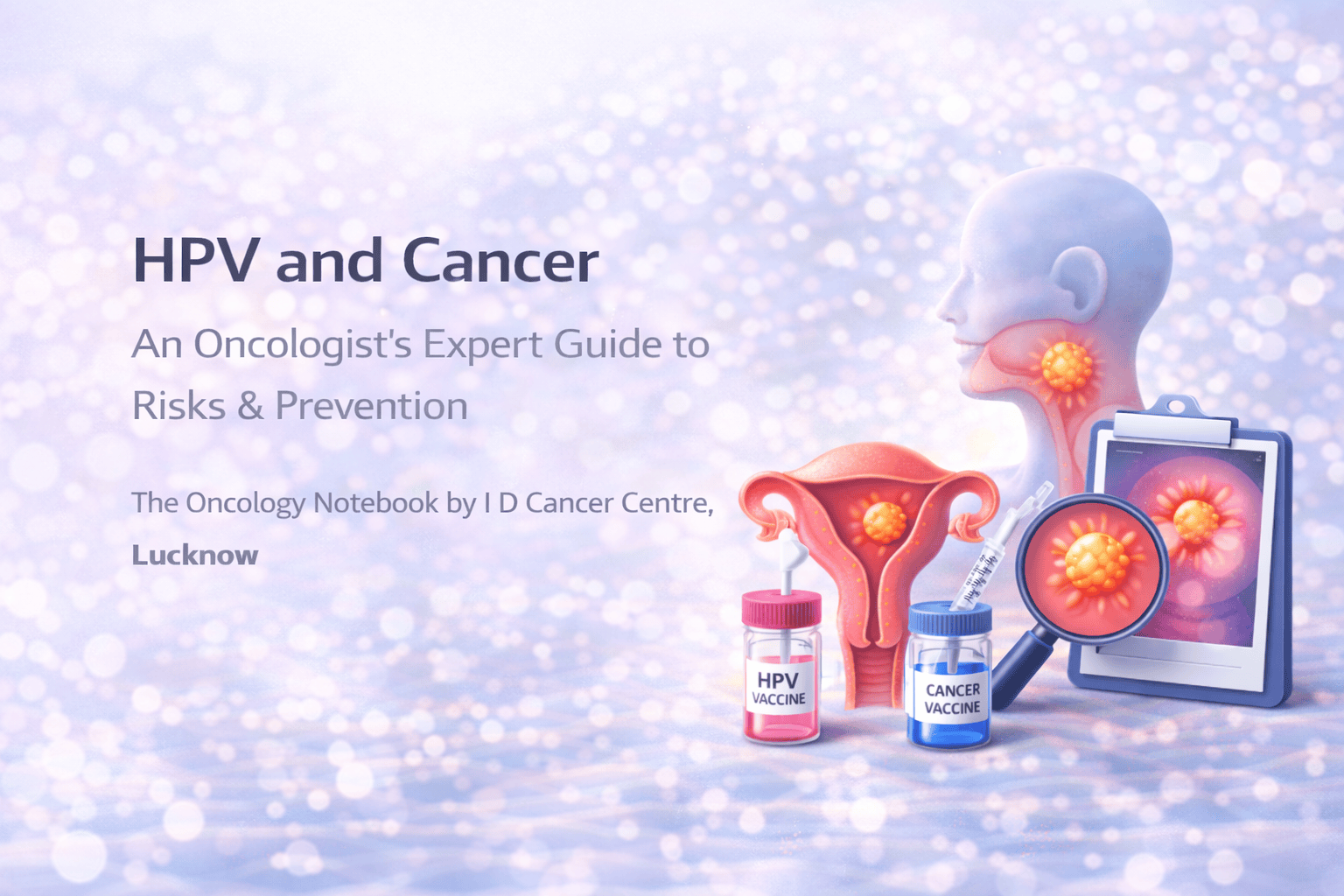
Human Papillomavirus (HPV) is one of the most common viral infections worldwide—and also one of the most misunderstood. Most HPV infections cause no symptoms and clear naturally. But when high-risk HPV persists, it can lead to pre-cancer changes and, over years, cancers of the cervix, throat (oropharynx), anus, vulva, vagina, and penis. The good news: HPV-related cancers are among the most preventable cancers through vaccination, screening, and early treatment of pre-cancer.
This expert guide explains what HPV is, which cancers it can cause, how screening works, and what patients should do—especially in the Indian context.
1) What is HPV (and why it matters)?
HPV is a group of more than 100 related viruses. Some types cause common skin warts, while others infect mucosal surfaces (genital region, mouth/throat).
HPV types are broadly classified as:
Low-risk HPV: mainly causes genital warts (rarely causes cancer)
High-risk HPV: can cause cellular changes that may progress to cancer (e.g., HPV 16, 18 and others)
Key point: HPV is extremely common. Having HPV is not a sign of poor hygiene or “bad behavior.” It is a common infection transmitted mainly through sexual contact and close skin-to-skin contact.
2) How HPV causes cancer (simple explanation)
Cancer does not happen immediately after HPV exposure. The usual pathway is:
HPV infection → persistent infection with high-risk type → pre-cancer (dysplasia/CIN) → cancer over years
Most people clear HPV within 1–2 years. Persistent infection is more likely when:
Immunity is weak (HIV, immunosuppressive drugs)
Smoking is present
Screening is not done
High-risk HPV types are involved
This “long timeline” is exactly why screening and vaccination are so effective.
3) Which cancers are linked to HPV?
A) Cervical cancer (strongest association)
Most cervical cancers are linked to high-risk HPV. This is why Pap/HPV screening is so important.
B) Oropharyngeal cancer (throat cancer: tonsil/base of tongue)
HPV-related throat cancers are increasingly recognized, and may occur even in non-smokers. They often present with:
Neck lump (lymph node)
Persistent sore throat, swallowing difficulty
Voice changes in some cases
C) Anal cancer
Higher risk in certain groups; screening may be advised in selected high-risk populations.
D) Vulvar, vaginal, and penile cancers
Less common overall but can be HPV-associated.
4) Common myths vs facts (important for patients)
Myth 1: “HPV means I will definitely get cancer.”
Fact: Most HPV infections clear naturally. Only persistent high-risk HPV can lead to cancer.
Myth 2: “HPV always causes symptoms.”
Fact: Most HPV infections cause no symptoms at all.
Myth 3: “Pap smear is only needed if I have symptoms.”
Fact: Screening is specifically designed for people without symptoms.
Myth 4: “HPV vaccine is not useful after marriage.”
Fact: Vaccine works best before exposure, but may still provide benefit in some age groups. Your doctor can advise based on age and risk.
Myth 5: “HPV vaccine replaces screening.”
Fact: Vaccination reduces risk but does not replace regular screening.
5) HPV screening: Pap test vs HPV test (what’s the difference?)
Pap test (Pap smear)
Looks for abnormal cells on the cervix
Detects pre-cancer changes early
HPV DNA test
Looks for high-risk HPV types
Identifies risk even before cell changes appear
Co-testing (Pap + HPV)
Used in some settings for certain age groups
Helps refine risk and follow-up intervals
If an HPV test is positive: it does not mean cancer. It means you need appropriate follow-up (often repeat testing or colposcopy depending on age and results).
6) What happens if screening is abnormal?
Abnormal Pap/HPV results usually lead to:
Repeat testing at a recommended interval, and/or
Colposcopy (a detailed cervix exam with magnification)
Biopsy (confirmation)
If pre-cancer is found (CIN), it can often be treated effectively (for example, with procedures like LEEP or conization as appropriate), preventing cancer.
7) HPV vaccination: prevention that works
HPV vaccination is one of the most powerful cancer-prevention tools.
Who should consider HPV vaccination?
Best before sexual exposure (commonly in adolescence)
Catch-up vaccination may be advised in certain age ranges based on local guidance and clinical judgement
Who benefits?
Girls and women: reduces cervical and other HPV-related cancers
Boys and men: reduces genital warts and HPV-related cancers; also reduces community spread
Bottom line: Vaccination + screening is the strongest combination for prevention.
8) HPV, immunity, and lifestyle: what actually helps
You cannot “wash away” HPV, but you can reduce the chance of persistence:
Stop tobacco (smoking and chewing tobacco)
Treat other infections as advised
Manage diabetes and chronic illnesses
Maintain adequate nutrition and sleep
Use barrier protection to reduce transmission risk (not 100% protective but helpful)
9) Can HPV infection be treated?
There is no “antibiotic” that eliminates HPV directly. Management focuses on:
Monitoring and supporting immune clearance
Treating HPV-related lesions (warts, pre-cancer)
Treating cancers if present
For cervical disease:
- Pre-cancers can often be treated early with excellent outcomes.For HPV-related cancers:
Treatment depends on site and stage (surgery, radiotherapy, chemotherapy, targeted therapy in selected cases).
10) HPV-related cancer treatment: an expert perspective
From an oncology standpoint, HPV status can influence:
Prognosis and response patterns (especially in certain oropharyngeal cancers)
Treatment planning (still based primarily on stage and site)
Follow-up strategy
11) When should you see a doctor?
Seek evaluation if you have:
Abnormal vaginal bleeding (especially after sex or after menopause)
Persistent foul-smelling or blood-stained discharge
A persistent neck lump or throat symptoms lasting > 2–3 weeks
Persistent anal bleeding/pain (especially if risk factors exist)
Any abnormal screening report (Pap/HPV)
12) Frequently asked questions
Is HPV common in India?
Yes. HPV is common globally. The difference in outcomes depends on vaccination, screening access, and early treatment.
If HPV is positive, will my partner also have it?
HPV can be shared between partners, and many people clear it without knowing. Focus on medical follow-up rather than blame.
Can HPV come back?
Sometimes HPV can appear again due to re-exposure or reactivation. Follow screening guidance.
Can I still take the vaccine if I already had HPV?
In many cases, vaccination can still protect against HPV types you have not been exposed to. Discuss with your doctor.
Key takeaways (quick summary)
HPV is common; most infections clear naturally.
Persistent high-risk HPV can cause cancers over years.
HPV-related cancers are among the most preventable cancers.
Vaccination + screening + early treatment of pre-cancer saves lives.
Do not delay evaluation if you have warning signs or abnormal reports.
Get guidance at I D Cancer Centre
If you have abnormal Pap/HPV results, cervical symptoms, or throat symptoms with a persistent neck lump, we can help you plan the correct next steps and treatment when needed.
