
Biopsy: The Small Test That Can Save Your Life – Myths, Facts & Benefits | I D Cancer Center, Lucknow
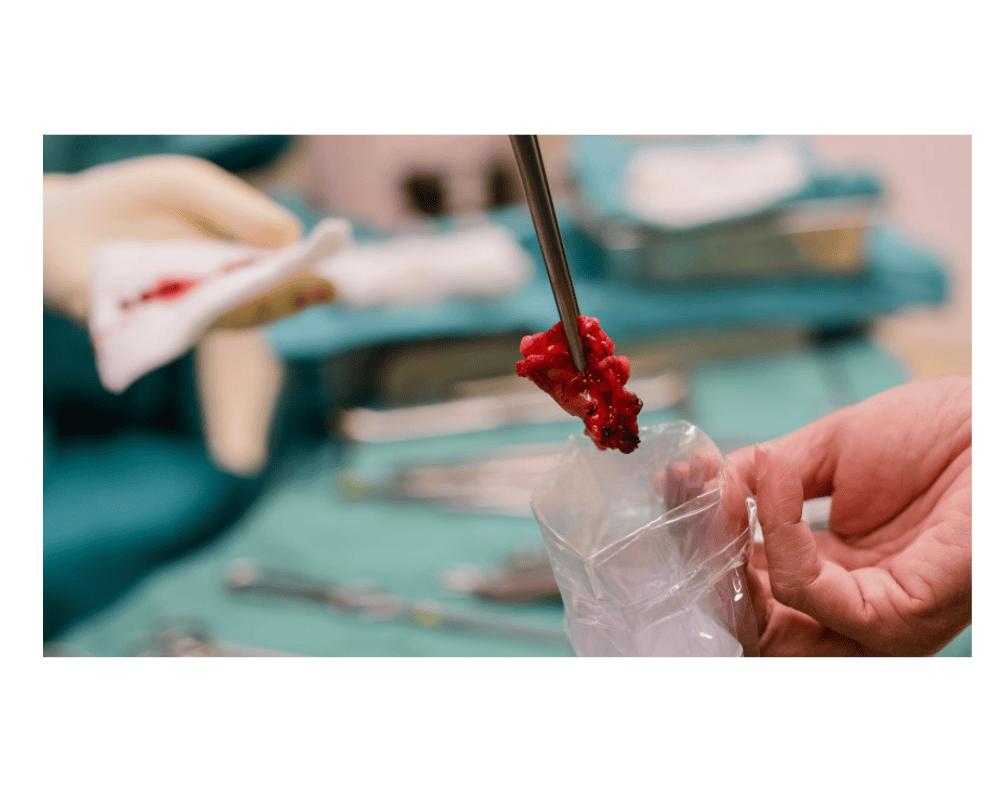
Biopsy is one of the most important tests in modern cancer care – yet it is also one of the most misunderstood. Many people feel scared when their doctor suggests a biopsy. Some even refuse it because of fear, confusion, or wrong information from friends, relatives, or the internet.
At I D Cancer Center, Sushant Golf City, Lucknow, we see this every day. As a Radiation Oncologist, I’m Dr. Sunil Kumar (M.B.B.S., M.D.), and I want to explain in simple language what a biopsy is, why it is so important, common myths vs facts, and how it actually helps save lives.
What Is a Biopsy?
A biopsy is a simple medical procedure where a doctor takes a small sample of tissue or cells from a suspicious area of the body and sends it to a lab for testing.
The sample may be taken from a lump, ulcer, swelling, or abnormal area seen on an ultrasound, CT scan, MRI, or PET-CT.
A pathologist (specialist doctor) examines this sample under a microscope and may also use special tests to give an accurate diagnosis.
In simple words:
Biopsy is the only way to know for sure what a disease is – cancer or non-cancer.
At I D Cancer Center, biopsy reports help us plan safe, personalised treatment for conditions like breast cancer, oral cancer, lung cancer, cervical cancer, prostate cancer, lymphomas and many more.
Why Is Biopsy So Important in Cancer Care?
Many tests – like ultrasound, CT/MRI scan, PET scan, and blood tests – can suggest that something might be wrong.But only a biopsy can confirm the exact disease.1. Biopsy tells if a lump is cancerous or not
It helps differentiate between benign (non-cancerous) and malignant (cancerous) conditions.
This avoids unnecessary fear if the lump is non-cancerous and ensures timely treatment if it is cancer.
For example, a breast lump may be fibroadenoma (benign) or breast cancer (malignant). Biopsy gives the final answer.2. Biopsy tells the type and grade of cancer
Not all cancers are the same. Two patients with “breast cancer” or “lung cancer” may have completely different types that respond to different treatments.
Biopsy helps us know:
Exact type of cancer (for example: ductal carcinoma, squamous cell carcinoma, adenocarcinoma, lymphoma, etc.)
Grade of the tumour (how aggressive or fast-growing it is)
Sometimes, molecular markers (like hormone receptors, HER2, or other genetic changes), which guide targeted therapy and hormonal therapy.
At I D Cancer Center, we use biopsy results to plan treatments like:
Radiotherapy (IMRT, VMAT/Arch Therapy, SRS/SRT, Adaptive Radiotherapy)
Chemotherapy & Targeted Therapy
Immunotherapy
Hormonal Therapy
3. Biopsy guides the right treatment plan
Based on biopsy results, your oncologist decides:
Whether you need surgery, radiotherapy, chemotherapy, immunotherapy, targeted therapy, or a combination.
Whether treatment can be curative (aimed at complete cure) or palliative (aimed at symptom control and quality of life).
In some cases, if active surveillance (close observation) is enough.
Without a biopsy, treatment may be incomplete, inappropriate or delayed.
4. Biopsy can prevent unnecessary surgery or treatment
Sometimes, an abnormal scan or lump looks suspicious but turns out to be infection, tuberculosis, inflammation, or a benign tumour.
If biopsy shows a non-cancerous condition:
You may avoid major surgery.
You may not require chemotherapy or radiotherapy.
You can often be treated with medicines or smaller procedures.
So, biopsy doesn’t just detect cancer – it also protects you from overtreatment.
5. Biopsy helps in advanced and recurrent disease
Biopsy may be needed when:
Cancer is suspected to have come back after treatment.
Cancer has possibly spread to other organs (metastasis).
A new lesion is seen on follow-up scans.
In such situations, biopsy helps us at I D Cancer Center to re-check the disease biology and adjust treatment (for example, change chemotherapy, add immunotherapy, or plan palliative radiotherapy).
Common Myths About Biopsy – and the Truth
Many patients and families in our region come with strong fears about biopsy. Let us clear some of the most common myths.
Myth 1: “Biopsy spreads cancer in the body.”
Fact:This is one of the most widespread and dangerous myths.Modern biopsy techniques are safe and globally accepted.
Needles and instruments are designed to minimise any risk of tumour spread.
If biopsy actually spread cancer, it would not be recommended in international guidelines or practiced at leading centres worldwide.
Refusing or delaying a biopsy due to this myth can allow cancer to grow silently and reduce the chance of cure.
Myth 2: “Biopsy is very painful.”
Fact:Most biopsies are done under local anaesthesia (numbing injection) or short sedation.You may feel a small prick or mild pressure, but not severe pain.
The procedure is usually short.
Any discomfort after the biopsy is generally mild and controlled easily with simple painkillers.
At I D Cancer Center, we focus on making the procedure as comfortable and reassuring as possible.
Myth 3: “If my scan is positive, why do I need a biopsy?”
Fact:Scans like ultrasound, CT, MRI, or PET-CT can suggest cancer but cannot confirm the exact type and nature.A scan shows images, but a biopsy shows real cells.
The choice of chemotherapy, targeted drugs, immunotherapy, and sometimes even radiotherapy dose and technique depends on biopsy-based reports, not scan alone.
Think of a scan as a map and biopsy as the final proof.
Myth 4: “If the biopsy is normal, the test was useless.”
Fact:A normal or benign biopsy is actually good news.It means that at that site you do not have cancer.
It gives peace of mind and helps your doctor search for other, less serious causes of your symptoms.
Ruling out cancer is equally valuable as detecting it.
Myth 5: “Biopsy means I definitely have cancer.”
Fact:Not true.Biopsy is done whenever there is suspicion – not only when cancer is confirmed.
Many biopsy reports show benign tumours, infections (like tuberculosis), or inflammatory diseases.
So, don’t assume the worst just because a biopsy is advised.
Myth 6: “Biopsy is very risky and unsafe.”
Fact:When done by trained specialists, biopsy is a low-risk procedure.Possible but usually minor side effects:
Mild bleeding or bruising at the site
Temporary pain or discomfort
Rarely, infection
Serious complications are uncommon, especially when biopsy is done with ultrasound or CT guidance and proper precautions, as we follow at I D Cancer Center.
Types of Biopsy
You may hear different biopsy names. Here are some common types:
Fine Needle Aspiration (FNA)
A very thin needle takes a few cells from a lump or swelling.
Quick, often done in OPD.
Core Needle Biopsy
A slightly thicker needle takes a tiny “core” of tissue.
Common for breast lumps, prostate, liver, bone, and soft tissue masses.
Incisional Biopsy
A small part of a larger mass is removed for testing.
Excisional Biopsy
The entire small lump is removed, commonly used for small skin or neck lumps.
Endoscopic / Bronchoscopic Biopsy
Taken from inside the body (like stomach, colon, or lungs) during endoscopy/bronchoscopy.
Image-Guided Biopsy (USG / CT-guided)
A needle is guided by ultrasound or CT to reach deeper organs like liver, lung, bone safely.
Your doctor at I D Cancer Center will choose the simplest and safest biopsy type based on your condition.
What Happens During a Biopsy at I D Cancer Center?
Understanding the process reduces fear.
Counselling & Consent
Dr. Sunil Kumar and team will explain why biopsy is needed, how it will be done, and possible risks.
You will be asked to sign a consent form.
Preparation & Positioning
You will be made to sit or lie down comfortably.
The area is cleaned with antiseptic solution.
Local Anaesthesia
A small injection is given to numb the area.
You may feel a pinch for a few seconds.
Sample Collection
The doctor uses a fine or core needle (or other instrument) to take one or more small tissue samples.
Dressing
A small bandage is applied.
You are observed for a short time.
Lab Analysis
The sample is sent to a specialised pathology laboratory.
Sometimes advanced tests (immunohistochemistry, molecular markers) are done based on need.
Report Discussion & Treatment Planning
Once the report is ready, we discuss it with you and your family.
- A personalised treatment plan is made, which may include surgery, radiotherapy, chemotherapy, immunotherapy, or a combination.
Is Biopsy Safe?
Yes, biopsy is generally safe, and complications are rare.
To keep you safe, we:
Review your medical history, blood tests, and medicines (especially blood thinners).
Use sterile techniques and, when needed, image guidance.
Monitor you after the procedure for a short time.
The small risk of biopsy is much less than the risk of missing or delaying a cancer diagnosis.
How Can You Prepare for a Biopsy?
Inform your doctor about:
All medicines you are taking (especially aspirin, clopidogrel, warfarin, etc.).
Any allergies or previous reactions to anaesthesia.
History of diabetes, heart disease, kidney disease, or bleeding problems.
Follow instructions about:
Fasting (if required for certain types of biopsy).
Temporarily stopping specific medicines (only as advised).
Wear loose, comfortable clothes.
You may bring a family member for support.
Our team at I D Cancer Center will guide you at every step.
When Should You Ask Your Doctor About a Biopsy?
You should discuss biopsy with your doctor if you have:
A lump in the breast, neck, armpit, groin, or anywhere in the body
A non-healing ulcer in the mouth or on the skin
Long-standing hoarseness, throat pain, difficulty swallowing
Blood in stool, urine, or sputum
Unexplained weight loss, fever, or persistent pain
Suspicious findings on ultrasound, CT, MRI, or PET-CT scan
Key Takeaways – Why Biopsy Is So Important
Biopsy is the gold standard for confirming cancer and many other diseases.
It tells the exact type and grade of cancer and guides individualised treatment.
It can prevent unnecessary surgery or aggressive treatment if the lesion is benign.
Modern biopsy techniques are safe, quick, and usually not very painful.
Myths like “biopsy spreads cancer” are false and can dangerously delay diagnosis.
If your doctor at I D Cancer Center has advised a biopsy, remember:
A small tissue sample today can give you a clear diagnosis and may save your life tomorrow.
