
Radiotherapy for Head & Neck Cancer: A Simple Patient Guide
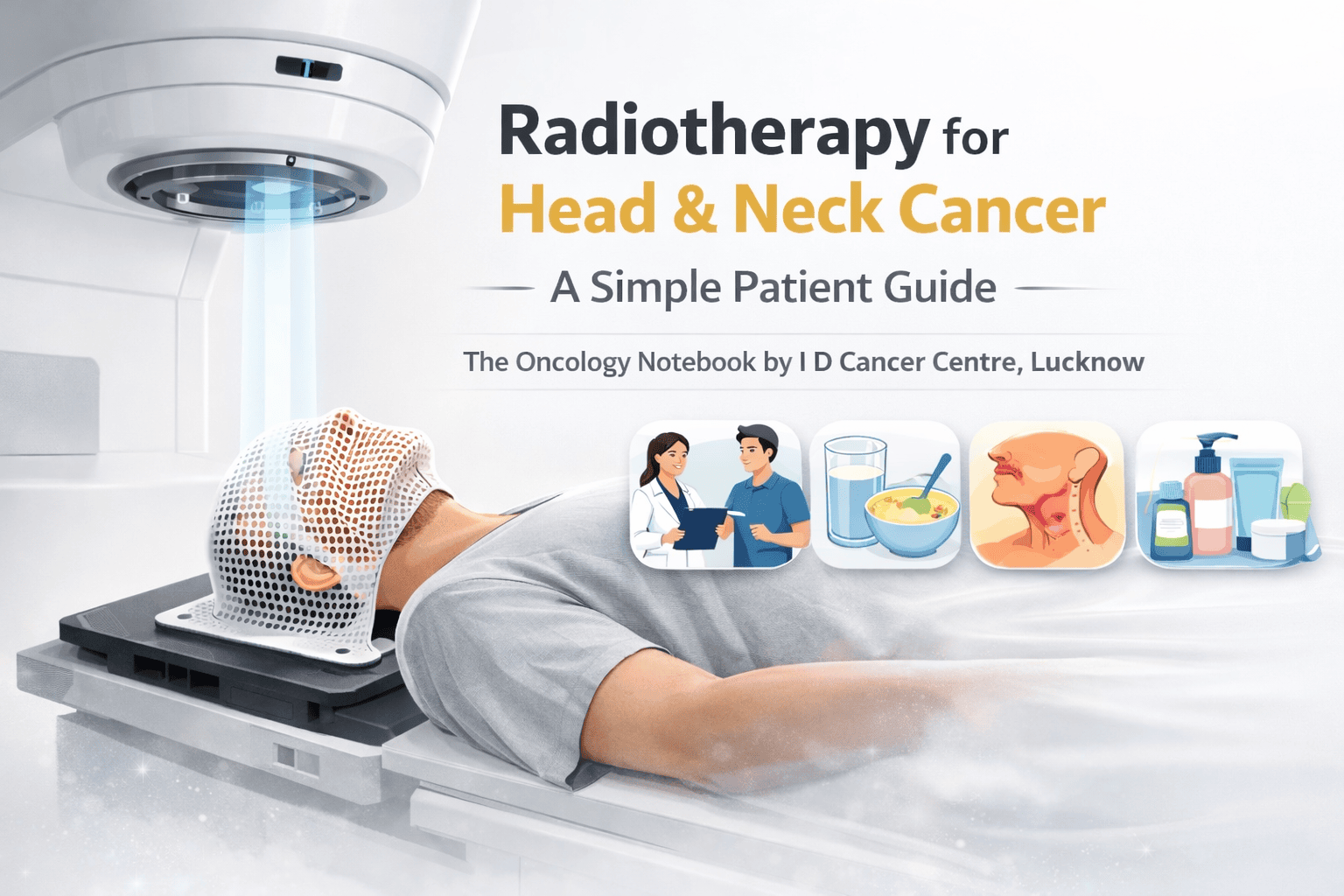
Radiotherapy (radiation treatment) is one of the most effective treatments for cancers of the head and neck region—such as cancers of the mouth (oral cavity), throat (pharynx), voice box (larynx), nasopharynx, salivary glands, and related lymph nodes in the neck. This guide explains what radiotherapy is, why it is used, how treatment is planned, what you may feel during the course, and how to manage common side effects.
Important: This is general education. Your treatment plan is customized based on cancer type, stage, scans, and your overall health. Always follow your oncology team’s instructions.
1) What is radiotherapy?
Radiotherapy uses high-energy X-rays (or similar beams) to destroy cancer cells. The beam is delivered from outside the body by a machine (often called a LINAC). The treatment itself is painless—like getting an X-ray—but it must be delivered very precisely and repeatedly over multiple sessions to be effective.
2) Why radiotherapy is used in head & neck cancer
Radiotherapy may be used:
A) As the main treatment (Definitive radiotherapy)
When radiotherapy (often with chemotherapy) is intended to cure the cancer without surgery.
Common in many throat/voice-box cancers and some nasopharyngeal cancers.
B) After surgery (Adjuvant radiotherapy)
To reduce the risk of recurrence if microscopic cancer cells could remain.
Especially if the pathology report shows higher-risk features.
C) With chemotherapy (Chemoradiation)
Sometimes radiotherapy is given together with chemotherapy to improve cancer control. This combination is used when the cancer is more advanced or has specific high-risk features.
D) For symptom relief (Palliative radiotherapy)
If cure is not the goal, radiotherapy can still reduce pain, bleeding, obstruction, or swelling.
3) Common questions patients ask early
“Will I lose hair?”
Usually no—only hair in the treated area may thin. Scalp hair is not affected unless the beam includes the scalp.
“Will the mask suffocate me?”
No. The mask is a firm plastic sheet molded to your face/neck to help you stay perfectly still. You can breathe normally through it.
“Is radiotherapy dangerous to my family?”
No. External beam radiotherapy does not make you radioactive. You can safely be around family members, including children.
4) Before treatment starts: what you should do
Head & neck radiotherapy affects the mouth, throat, and swallowing. Preparing early helps a lot.
Key pre-treatment steps
Dental evaluation: very important (to reduce risk of tooth problems later).
Nutrition assessment: many patients lose weight during treatment; planning nutrition early prevents complications.
Stop tobacco and alcohol: improves healing and outcomes.
Discuss medications: especially diabetes, blood thinners, thyroid medicines.
Speech/swallow therapy (if advised): learning exercises early improves recovery.
Some patients may be advised a feeding tube (PEG/Ryle’s tube) depending on expected swallowing difficulty and baseline nutrition. This is individualized.
5) CT Simulation: the most important appointment
Before your first radiotherapy session, you will have a planning scan called CT Simulation.
What happens in CT simulation?
You lie on a flat table in the treatment position.
A custom immobilization mask is made (especially for head & neck cancers).
Your head/neck are supported using a standardized baseplate and headrest.
A planning CT scan is done (sometimes with contrast).
Small skin marks may be placed to help daily alignment.
Why the mask matters
Head & neck radiotherapy needs millimeter-level accuracy. The mask:
Keeps your head/neck in the same position daily
Helps protect nearby organs like the spinal cord, salivary glands, jawbone, and voice structures
6) How the plan is made (IMRT/VMAT/IGRT in simple terms)
After simulation, specialists create your plan:
IMRT / VMAT: advanced planning methods that shape dose tightly around the tumor and reduce dose to normal tissues.
IGRT / CBCT: daily imaging (often a quick CT on the machine) to confirm position before each treatment.
Adaptive radiotherapy (in selected cases): if your anatomy changes significantly (weight loss, tumor shrinkage), your team may repeat scans and adjust the plan.
This planning phase typically takes several days.
7) What treatment feels like day-to-day
During each session
You lie on the table with the mask on.
Staff aligns you using lasers and imaging.
The machine rotates around you; you may hear sounds.
You do not feel the radiation.
Typical time in the room: 10–20 minutes (beam-on time is usually only a few minutes).
How long is the full course?
Most curative courses are delivered 5 days/week over several weeks. The exact number of sessions depends on your diagnosis and intent (definitive vs post-op vs palliative).
8) Side effects: what to expect and when
Side effects usually start after 1–2 weeks and may peak near the end of treatment or shortly after completion. Everyone’s experience differs.
Common early (during treatment) side effects
Mouth/throat
Sore throat, painful swallowing (odynophagia)
Mouth ulcers (mucositis)
Thick saliva or sticky phlegm
Taste changes
Dry mouth
Skin
Redness and burning sensation in the treated area (like sunburn)
General
Fatigue
Loss of appetite and weight loss
Hoarseness (voice change) if the larynx area is treated
If chemotherapy is given with radiotherapy, you may also have
Nausea/vomiting
Lower blood counts (infection risk)
Kidney function monitoring (medicine-dependent)
9) Practical self-care: what helps most
These steps make treatment more tolerable and reduce complications.
A) Mouth care (daily routine)
Brush gently with a soft toothbrush 2–3 times/day.
Rinse frequently (your team may recommend specific mouth rinses).
Maintain hydration—dry mouth worsens soreness.
Avoid tobacco, alcohol, very spicy food, and hard/crispy items.
Seek help early for pain—good pain control improves nutrition and recovery.
B) Swallowing and jaw exercises
Swallowing muscles can become stiff. If your team gives exercises, do them daily. Typical goals:
Maintain swallowing function
Prevent jaw tightness (trismus)
Reduce long-term stiffness
C) Nutrition tips that work in real life
Aim for high-calorie, high-protein foods:
Dal, curd, paneer, eggs, soft khichdi, smoothies, soups
Add ghee/olive oil (as tolerated)
Small frequent meals (every 2–3 hours)
If swallowing becomes difficult:
Shift to soft/puréed diet
Use supplements if prescribed
Consider feeding support early rather than late
D) Skin care during radiotherapy
Wash gently with mild soap; pat dry.
Avoid rubbing, scrubbing, and tight collars.
Do not apply any cream right before treatment unless your team approves (timing matters).
Protect skin from sun exposure.
10) When to call your doctor urgently
Contact your team immediately if you have:
Fever (especially during chemoradiation)
Inability to swallow liquids or signs of dehydration (very low urine, dizziness)
Uncontrolled pain despite medication
Bleeding from mouth/throat
Breathing difficulty or noisy breathing
Severe vomiting, confusion, extreme weakness
Rapid weight loss or inability to eat for more than 24 hours
11) After radiotherapy ends: what recovery looks like
Many side effects continue for 2–3 weeks after the last session, then slowly improve. Recovery is gradual.
Follow-up usually includes
Regular clinical examinations
A scan at an appropriate time (your doctor will decide when)
Ongoing nutrition and swallowing rehabilitation support
Dental care and fluoride guidance (critical long-term)
12) Possible late effects (months to years later)
Not everyone develops late effects, but it is important to know them:
Persistent dry mouth (xerostomia)
Dental problems (higher cavity risk)
Jawbone complications (rare but serious—requires dental precautions)
Neck stiffness/fibrosis
Swallowing difficulty
Thyroid dysfunction (if the neck area was treated; may need periodic thyroid tests)
Hearing issues (in select cases, depending on area treated and chemo type)
Your team will help monitor and manage these proactively.
13) Caregiver Corner: how families can help
Keep a daily log: weight, pain score, intake, medicines
Encourage hydration and small frequent meals
Support mouth care routine
Attend weekly review visits and ask questions
Watch for red flags (fever, dehydration, breathing difficulty)
Provide emotional stability—treatment is tiring and anxiety is common
14) FAQs
Can I work during radiotherapy?
Some patients continue work, but fatigue and mouth/throat soreness may limit it. If you can, plan lighter duties and rest.
Can I eat normal food?
Initially yes. As soreness increases, most people switch to softer foods temporarily.
Will radiotherapy cure my cancer?
Radiotherapy can be curative in many head & neck cancers. Outcomes depend on cancer type, stage, and response—your oncologist can give individualized expectations.
A simple daily checklist for patients
☐ Brush gently and rinse regularly
☐ Drink water often (small sips all day)
☐ Eat high-protein foods frequently
☐ Take medicines exactly as advised
☐ Do swallow/jaw exercises (if prescribed)
☐ Track weight twice weekly (or as advised)
☐ Report fever, dehydration, or severe pain immediately
