
Oral Submucous Fibrosis (OSMF): An Expert Guide to Symptoms, Stages, Cancer Risk & Treatment
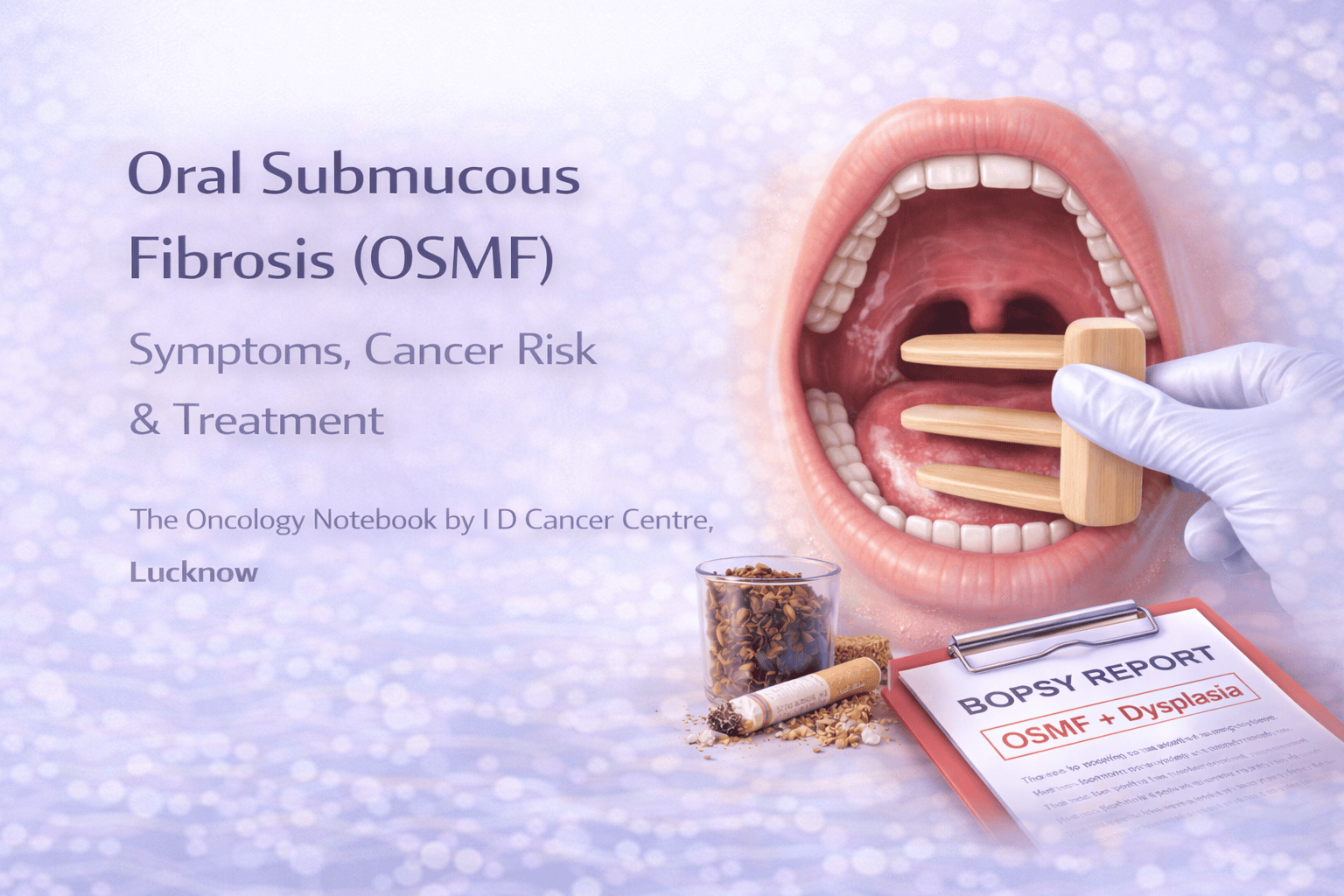
Oral Submucous Fibrosis (OSMF) is a chronic, progressive pre-cancer condition of the mouth in which the oral lining becomes inflamed and gradually forms fibrous bands. Over time, the mouth feels tight, causing reduced mouth opening (trismus) and difficulty eating. OSMF is strongly linked to areca nut (supari) use—often in the form of gutkha, pan masala, mawa, and betel nut preparations—with tobacco and alcohol further increasing risk.
The most important message is simple:
1) What is Oral Submucous Fibrosis (OSMF)?
OSMF is a disease where the inner lining of the mouth (oral mucosa) develops:
Chronic inflammation
Loss of elasticity
Progressive scarring (fibrosis) and formation of tight bands
Because the mucosa becomes stiff, patients gradually develop:
Burning sensation
Difficulty opening the mouth
Difficulty eating spicy food and speaking comfortably
OSMF is classified as a Potentially Malignant Disorder (pre-cancer condition). That means it can transform into oral cancer in a subset of patients—especially if habits continue and follow-up is neglected.
2) Why does OSMF happen?
Main cause: Areca nut (supari)
Areca nut contains alkaloids (e.g., arecoline) that stimulate fibroblasts and collagen deposition, leading to fibrosis. The risk increases with:
Frequent chewing
Long duration of use
Stronger commercial preparations (gutkha/pan masala/mawa)
Factors that worsen risk
Tobacco chewing or smoking
Alcohol (synergistic risk for cancer)
Nutritional deficiencies (iron, vitamins) may worsen symptoms
Chronic irritation/poor oral hygiene
In India, areca nut products are a leading driver of OSMF. Many users believe “pan masala is harmless” if it has no tobacco—this is a dangerous myth.
3) Who is at risk?
OSMF commonly affects:
Teenagers and young adults (increasingly common)
Long-term gutkha/pan masala/mawa/supari users
People who chew multiple times per day
People with combined habits (areca + tobacco + alcohol)
4) Symptoms: how to recognize OSMF early
OSMF symptoms often develop gradually:
Early symptoms
Burning sensation in mouth, especially with spicy food
Recurrent mouth ulcers or soreness
Dryness of mouth
Tightness or stiffness in cheeks
Progressive symptoms
Reduced mouth opening (trismus)
Difficulty eating/chewing
Difficulty swallowing in advanced cases
Change in voice clarity due to restricted movement
Reduced tongue movement
Visible signs (what a doctor may see)
Pale, blanched oral mucosa
“Marble-like” stiffness
Fibrous bands in cheeks, lips, soft palate
Reduced cheek elasticity
Sometimes co-existing leukoplakia (white patches)
5) A simple home check: mouth-opening measurement
A quick practical marker is the inter-incisal mouth opening (distance between upper and lower front teeth on maximal opening). If it feels reduced compared to earlier, take it seriously.
Key point: Mouth opening reduction in a gutkha/supari user is a classic warning sign.
6) Staging of OSMF (easy understanding)
Clinicians stage OSMF based on mouth opening and clinical findings. A simplified understanding:
Mild (early): burning, mild stiffness, minimal mouth opening restriction
Moderate: noticeable fibrous bands, clear restriction, eating discomfort
Severe: marked restriction (trismus), significant fibrosis, difficulty eating and speaking
Advanced: severe trismus + possible pre-cancer patches or suspicious ulcers
Exact staging varies by guideline, but the key point is: earlier stage = better response.
7) Why OSMF is important: cancer risk
OSMF is a pre-cancer condition. A proportion of OSMF cases can develop:
Oral squamous cell carcinoma (OSCC)
Cancers of buccal mucosa, tongue, floor of mouth, etc.
Risk increases when:
The habit continues (supari/gutkha)
Tobacco is added
There are additional lesions like leukoplakia or red patches
A non-healing ulcer develops
Pain increases, bleeding occurs, or a lump appears
Red flags that require urgent evaluation:
Non-healing ulcer > 2 weeks
New lump or thickening
Bleeding from lesion
Rapid worsening pain
Neck lump
White/red patches increasing in size
8) Diagnosis: how doctors confirm OSMF and rule out cancer
Clinical examination (most cases)
OSMF is often diagnosed clinically by:
History of areca nut use
Burning sensation
Reduced mouth opening
Palpable fibrous bands and mucosal blanching
Biopsy (if suspicious changes exist)
A biopsy is not mandatory for every OSMF case, but is strongly recommended when:
There is a suspicious ulcer
A white/red patch coexists
There is a mass or thickening
Symptoms are rapidly worsening
Biopsy helps rule out dysplasia or early cancer.
9) Treatment: what actually works
Treatment depends on stage, symptoms, and habit history.
Step 1: Stop the cause (most important)
Complete cessation of:
Gutkha, pan masala, mawa, supari (areca nut)
Tobacco in any form
Reduce/stop alcohol
This alone can stabilize disease and reduce cancer risk.
Step 2: Nutrition and deficiency correction
Doctors may advise:
Iron, folate, vitamin B complex, antioxidants (as per clinical judgement)
Dietary improvement (protein-rich foods, fruits/vegetables)
Hydration and oral hygiene measures
Step 3: Medical therapy (symptom relief and slowing progression)
Depending on severity, clinicians may use:
Topical steroids for burning/inflammation
Intralesional injections (e.g., steroid + hyaluronidase) in selected moderate cases
Pain management, antifungals if candida is present
Mouth moisturizers/saliva substitutes in dryness
Note: Treatment protocols differ by clinician and local practice; the evidence is mixed for some therapies, but many patients get symptomatic relief. The strongest proven intervention remains habit cessation and regular monitoring.
Step 4: Physiotherapy (very important)
Mouth-opening exercises can help maintain and improve opening:
Wooden spatula stacking exercises
Mouth-opening devices under guidance
Regular stretching exercises (daily)
Consistency matters more than intensity.
Step 5: Surgical management (selected severe cases)
In severe trismus with dense bands, surgery may be considered:
Fibrotic band release
Reconstruction with grafts/flaps (in selected cases)
Post-op physiotherapy is mandatory to maintain results
10) Diet tips for OSMF patients (practical)
When burning is severe:
Soft, non-spicy, non-acidic foods
Avoid chili, strong मसाले, very hot tea/coffee
Avoid tobacco/supari completely
Use bland mouth rinses (as advised)
Maintain hydration
Avoid very hard foods that injure mucosa
11) Follow-up: how often should you be monitored?
OSMF requires long-term follow-up to detect changes early. Typical follow-up advice:
Regular oral examinations at defined intervals (frequency depends on stage and risk)
Immediate visit if any red flag appears (ulcer, bleeding, new lump, rapid pain)
Do not ignore new changes just because “it’s OSMF.” Cancer can develop on top of it.
12) Frequently asked questions
Is OSMF curable?
Early OSMF can improve and stabilize significantly if the habit is stopped. Advanced fibrosis may not fully reverse, but symptoms and mouth opening can improve with treatment and physiotherapy.
If I stop gutkha/supari, will my mouth open normally again?
Many patients improve, especially early. In advanced cases, improvement may be partial and requires physiotherapy; some may need procedures.
Is pan masala without tobacco safe?
No. Areca nut (supari) itself is a major cause of OSMF and increases oral cancer risk.
Can OSMF turn into cancer?
Yes, OSMF is a pre-cancer condition. The risk increases if habits continue and if suspicious lesions appear.
Key takeaways (expert summary)
OSMF is a progressive scarring disease of the mouth, strongly linked to areca nut (supari/gutkha/pan masala).
Early signs include burning and tightness; later, reduced mouth opening is typical.
OSMF is a pre-cancer condition—regular follow-up and habit cessation are essential.
The most effective treatment step is stopping areca nut/tobacco + daily mouth-opening exercises.
Any non-healing ulcer, bleeding, lump, or neck node needs urgent evaluation.
Evaluation at I D Cancer Centre
If you have burning mouth, reduced mouth opening, or long-term gutkha/supari use, early evaluation can prevent progression and detect oral cancer early.
