
Head & Neck Cancer Risk Factors: An Expert Guide (What Increases Risk—and What You Can Control)
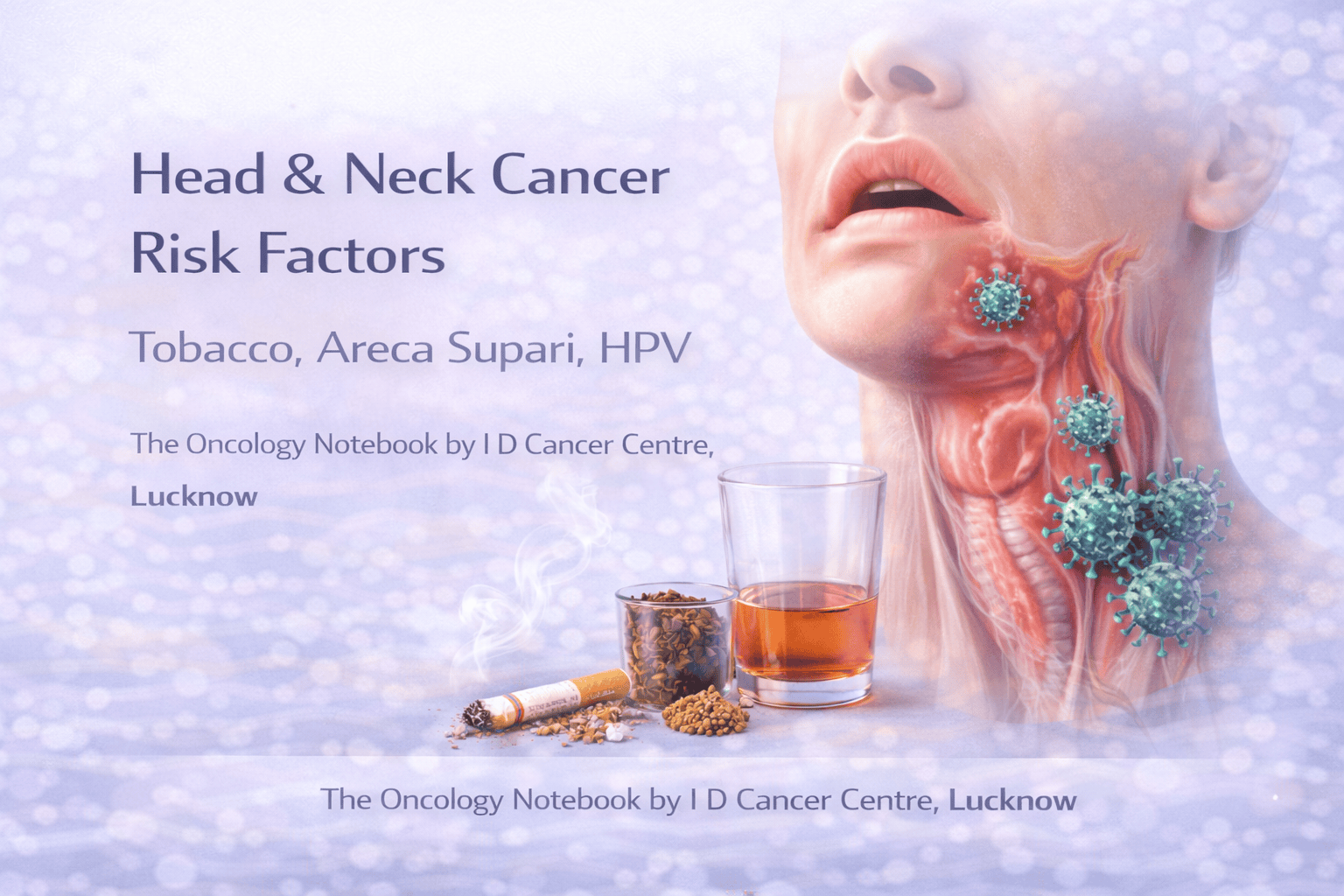
Head and neck cancers include cancers of the oral cavity (mouth), throat (pharynx/oropharynx), voice box (larynx), nasopharynx, sinuses, and salivary glands. In India, head and neck cancer is unfortunately common—largely because many risk factors are preventable.
The most important message is simple:
Most head and neck cancers are linked to tobacco, areca nut (supari), alcohol, and HPV. If we reduce these exposures and screen early, we can prevent many cases.
This expert guide explains the major and minor risk factors, high-risk combinations, early warning signs, and practical prevention strategies.
1) The biggest risk factors (the “Top 4”)
1) Tobacco in any form (smoking + chewing)
Tobacco is the strongest risk factor for many head and neck cancers.
Smoking forms
Cigarettes, bidi, hookah
Cigar/pipe (less common but still risky)
Chewing/smokeless forms
Gutkha, khaini, zarda, mawa
Pan with tobacco
Snuff and other smokeless products
Why it increases risk: Tobacco contains carcinogens that damage the lining of the mouth and throat over time. Risk increases with:
Early start
Higher frequency per day
Longer duration (years)
Combined chewing + smoking
Key clinical point: Smokeless tobacco is a major driver of oral cancer in India.
2) Areca nut (supari) and pan masala (even without tobacco)
Many people believe “pan masala without tobacco is safe.” This is a harmful myth.
Areca nut is a proven cause of Oral Submucous Fibrosis (OSMF), a pre-cancer condition that can progress to cancer.
Areca nut use increases risk even without tobacco.
High-risk products include:
Supari, pan masala
Gutkha (areca + tobacco)
Mawa and other mixtures
3) Alcohol (especially with tobacco)
Alcohol alone increases risk modestly, but the danger becomes much higher when alcohol is combined with tobacco.
4) HPV infection (especially for throat cancers)
High-risk HPV (notably HPV-related disease) is strongly linked to:
Oropharyngeal cancers (tonsil, base of tongue)
HPV-related throat cancers can occur in non-smokers too. A common presentation is:
Neck lump (lymph node)
Persistent sore throat or swallowing discomfort
Prevention: HPV vaccination reduces risk of HPV-related cancers.
2) Other important risk factors (often overlooked)
Poor oral hygiene + chronic irritation
Sharp broken tooth, ill-fitting dentures
Chronic cheek biting
Long-standing oral ulcers due to trauma
Chronic irritation alone may not be a strong independent cause, but in a person with tobacco/areca exposure, it can worsen mucosal damage.
Occupational exposures
Certain jobs have higher exposure risks:
Wood dust (sinonasal cancers)
Paints, solvents, formaldehyde (selected settings)
Nickel, chromium exposures in certain industries
Diesel exhaust (indirect contributor)
Occupational risks depend on intensity and duration of exposure and safety practices.
Prior radiation exposure to head/neck region
Rarely, previous therapeutic radiation (for another condition) can increase long-term cancer risk.
Weakened immunity
HIV
Long-term immunosuppressive medications (post-transplant, autoimmune diseases)
Poor nutritional status
Lower immunity reduces the body’s ability to clear infections and repair mucosal damage.
Epstein-Barr Virus (EBV) and Nasopharyngeal Cancer
Nasopharyngeal carcinoma has associations with:
EBV infection
Certain dietary patterns and genetic susceptibility (more common in specific geographic regions)
In India, it is less common than oral cavity cancer but still important.
3) High-risk combinations (risk multiplies)
Certain combinations dramatically increase risk:
Tobacco + alcohol (multiplicative risk)
Areca nut + tobacco (common in gutkha users)
Long duration + high frequency + poor oral hygiene
The earlier the start and longer the habit continues, the higher the cumulative risk.
4) “Pre-cancer conditions” that signal higher risk
These are important because they can progress to cancer if not managed:
Leukoplakia
Persistent white patch that doesn’t rub off
Requires evaluation; biopsy may be needed
Oral Submucous Fibrosis (OSMF)
Burning mouth + reduced mouth opening
Strongly linked to supari/gutkha/pan masala
Needs long-term follow-up
Erythroplakia (red patch)
Higher risk than leukoplakia
Often needs urgent biopsy
If you have these conditions, you need regular monitoring even after quitting habits.
5) Early warning signs (don’t wait)
Risk factors explain “who is at risk,” but symptoms tell us “when to check now.”
Seek evaluation if you have:
Mouth ulcer not healing in 2 weeks
White or red patch persisting > 2–3 weeks
Pain while swallowing or persistent throat pain
Persistent hoarseness > 2–3 weeks
Neck lump (painless, persistent)
Unexplained weight loss, ear pain on one side
Progressive reduced mouth opening (trismus)
6) How to reduce risk (practical prevention plan)
Step 1: Stop tobacco and areca nut completely
No “occasional” gutkha/supari
Avoid pan masala/areca products
Get help if dependent (cessation support)
Step 2: Reduce alcohol (ideally stop if tobacco history)
Cutting alcohol reduces irritation and synergy risk.
Step 3: Oral screening—especially for high-risk people
If you have:
Current or past tobacco/areca use
OSMF/leukoplakia history
Persistent symptoms
…you should have periodic oral and throat examination.
Step 4: HPV prevention
Consider HPV vaccination as per age and eligibility
Practice safe behaviors to reduce HPV transmission
Step 5: Maintain oral hygiene and fix dental irritants
Regular dental check-ups
Treat sharp teeth and denture issues
Good oral hygiene reduces chronic inflammation
7) Frequently asked questions
Is smoking worse than chewing tobacco?
Both are dangerous. In India, chewing tobacco and areca nut products are major causes of oral cancer, while smoking is strongly linked to larynx and throat cancers.
Is pan masala (without tobacco) safe?
No. Areca nut itself is a major risk factor and can cause OSMF and increase cancer risk.
Can young people get head and neck cancer?
Yes—especially with early habit initiation (gutkha/supari) or HPV-related oropharyngeal cancers.
If I stop tobacco, does risk become zero?
Risk reduces significantly over time, but it may not become zero immediately, especially if pre-cancer changes already exist. Regular follow-up helps.
Key takeaways (expert summary)
The biggest preventable risks are tobacco, areca nut/supari, alcohol, and HPV.
Areca nut is not safe, even without tobacco.
Pre-cancer lesions like leukoplakia and OSMF need follow-up.
Any ulcer/patch >2 weeks, hoarseness >3 weeks, or neck lump should be checked early.
Screening and evaluation at I D Cancer Centre
If you have a tobacco/supari history, mouth ulcers, white/red patches, reduced mouth opening, or a neck lump, early evaluation can prevent progression and detect head and neck cancer early.
