
Gallbladder Stones and Gallbladder Cancer: What’s the Real Risk? (Expert View)
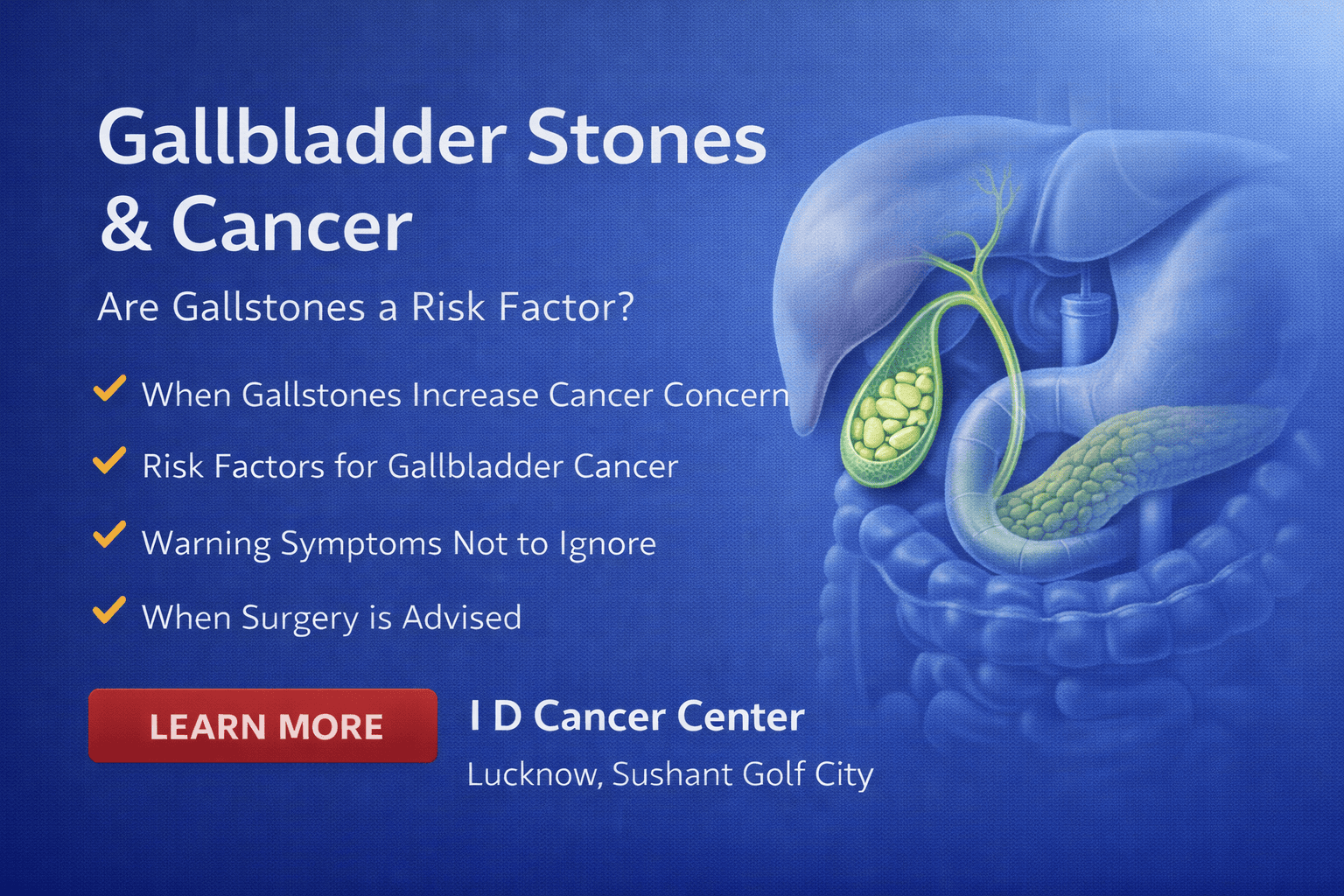
Gallbladder stones (gallstones) are extremely common. Gallbladder cancer is rare—but it is also one of the cancers that often presents late, so patients naturally worry when they learn they have stones.
Here’s the expert, evidence-based truth:
Most people with gallstones will never develop gallbladder cancer.
Gallstones are still the most common associated risk factor for gallbladder cancer because they can cause chronic inflammation over many years.
A small subset of patients have higher-risk features (for example, very large stones, porcelain gallbladder, suspicious polyps), where doctors may recommend earlier surgery or closer follow-up.
This guide explains who is at risk, what warning signs matter, and how we decide when gallbladder removal is preventive (and when it is not).
1) Gallstones: a quick overview
Gallstones are “pebble-like” collections that form in the gallbladder, often from cholesterol and bile components. Many are silent; others cause symptoms like:
right upper abdominal pain (especially after fatty meals)
nausea/bloating
episodes of acute cholecystitis (fever + pain)
jaundice or pancreatitis if a stone migrates to the bile duct
2) Do gallstones cause gallbladder cancer?
The accurate answer: “They increase risk, but the absolute risk is still low.”
Gallstones are found in many patients diagnosed with gallbladder cancer, but gallstones are far more common than cancer, so most stone patients never develop malignancy.
Why the association exists: long-standing stones can lead to chronic irritation and inflammation of the gallbladder lining, which is considered a major pathway in gallbladder carcinogenesis.
3) The “high-risk” gallstone situations doctors watch closely
A) Very large gallstones (especially ≥3 cm)
B) Porcelain gallbladder (calcified gallbladder wall)
“Porcelain gallbladder” refers to calcification of the gallbladder wall, usually due to chronic inflammation. Historically it was considered very high-risk; newer reviews suggest the risk may be lower than previously believed, but it is still treated as a risk marker, especially if symptomatic or with suspicious imaging.
C) Gallbladder polyps (especially ≥10 mm or with risk factors)
Most small polyps are benign (often cholesterol polyps), but guidelines commonly recommend cholecystectomy for polyps ≥10 mm or if a smaller polyp grows or has high-risk features (sessile morphology, wall thickening, age/risk context).
D) Long-standing chronic cholecystitis / “contracted” gallbladder
Repeated inflammation over years increases concern because chronic inflammation is central to the disease pathway.
4) Symptoms that should NOT be ignored (possible red flags)
Most gallstone symptoms are benign and treatable, but urgent evaluation is needed if you have:
Jaundice (yellow eyes/skin), dark urine, pale stools
Fever with chills + jaundice + abdominal pain (possible cholangitis—an emergency)
Unexplained weight loss, persistent anorexia
A mass felt in right upper abdomen (uncommon, but important)
Persistent pain not behaving like typical biliary colic
5) How we evaluate gallstones and rule out “something serious”
A structured workup usually includes:
Step 1: Ultrasound (USG abdomen)
First-line test—confirms stones, gallbladder wall thickening, polypoid lesions, duct dilatation.
Step 2: Blood tests
LFTs (bilirubin, ALP, GGT), CBC, inflammatory markers, pancreatic enzymes (if pancreatitis suspected).
Step 3: Further imaging when needed
MRCP for bile duct stones/obstruction mapping
Contrast CT / MRI if a mass or malignancy is suspected
Sometimes EUS for better assessment of small lesions and periampullary area
6) When is gallbladder removal (cholecystectomy) recommended?
Clear indications (strong consensus)
Symptomatic gallstones (biliary colic affecting life)
Acute cholecystitis
Gallstone pancreatitis (after stabilization, as advised)
Common bile duct stone disease (often ERCP + cholecystectomy plan)
Preventive / risk-based considerations
Surgery may be advised even if symptoms are mild/absent when high-risk factors exist, such as:
Very large stones (≥3 cm)
Porcelain gallbladder (especially symptomatic or suspicious features)
Polyp ≥10 mm or concerning growth/pattern
Important: “Asymptomatic gallstones = surgery for everyone” is not the rule. The decision is individualized based on age, comorbidities, imaging features, and surgical fitness.
7) If gallbladder cancer is found incidentally after surgery
Sometimes gallbladder cancer is detected unexpectedly on histopathology after cholecystectomy done for stones. This is why:
The histopathology report is important for every removed gallbladder.
Further staging and, in selected cases, additional surgery may be recommended depending on depth and spread.
(NCCN patient guidance lists chronic gallbladder conditions, including gallstones/inflammation, among recognized risk factors.)
8) Practical takeaways
Gallstones are common; gallbladder cancer is rare. Most stone patients never develop cancer.
Risk rises mainly through chronic inflammation, especially with large stones, porcelain gallbladder, or suspicious polyps.
If you have jaundice, fever with chills, or persistent atypical symptoms, seek evaluation quickly.
Care pathway at I D Cancer Center
If you have gallbladder stones with red-flag symptoms, recurrent cholecystitis, obstructive jaundice, or imaging features that raise concern, we can coordinate a streamlined evaluation plan (imaging + labs + specialist referral) and guide the next step safely.
