
How Do I Know If I Have Gallbladder Cancer? (Symptoms, Warning Signs & Tests)
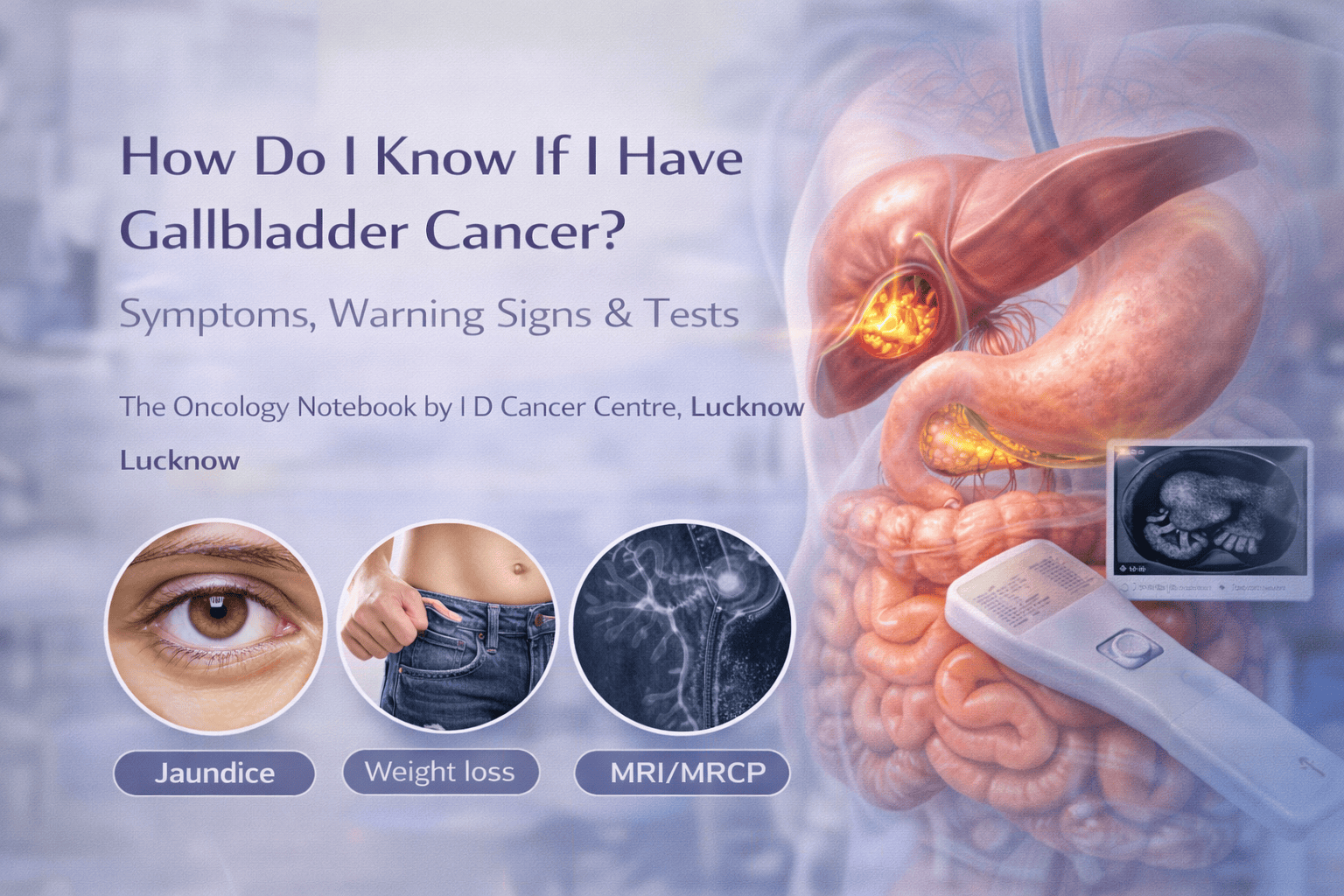
How Do I Know If I Have Gallbladder Cancer? (Symptoms, Warning Signs & Tests)
Gallbladder cancer is uncommon, but in North India it is seen more frequently than many people realize. The challenge is that early gallbladder cancer often has no clear symptoms, or symptoms look like routine gallbladder problems such as gallstones, acidity, or indigestion. Because of this, many patients are diagnosed late unless warning signs are recognized and proper imaging is done early.
This guide explains:
Common symptoms and red flags
Who is at higher risk (especially in India)
Which tests detect gallbladder cancer
What happens after diagnosis
When to seek urgent care
1) What is the gallbladder—and why cancer is missed early?
The gallbladder is a small organ under the liver that stores bile. Many people have gallstones that cause intermittent pain after fatty meals. Early gallbladder cancer can mimic gallstone symptoms because:
The tumor may irritate the gallbladder wall
The bile ducts may get partially blocked
Symptoms are vague in early stages
Key point: If symptoms are new, persistent, or associated with jaundice/weight loss, they need evaluation.
2) Early symptoms (often mistaken for gallstones or gastric problems)
Symptoms may be mild at first and can include:
A) Right upper abdominal pain
Dull ache or heaviness under right ribs
May worsen after meals
May radiate to back or right shoulder
B) Nausea, vomiting, indigestion
Persistent “gas” or bloating
Poor appetite
Food intolerance, especially fatty foods
C) Unexplained fatigue
Feeling low energy without clear reason
Important: These symptoms are common and usually benign. What matters is persistence, progression, and associated red flags.
3) Red flags (more concerning signs)
These symptoms are more suggestive of serious disease and need prompt assessment:
A) Jaundice (yellow eyes/skin)
Often indicates bile duct blockage
May be associated with dark urine and pale stools
May cause itching (pruritus)
B) Unexplained weight loss
Loss of weight over weeks to months without dieting
C) Persistent fever or recurrent infections
Sometimes due to biliary infection/cholangitis
D) A palpable mass or fullness in upper abdomen
Not always present, but concerning
E) Persistent pain that is worsening
Especially constant pain (not intermittent) and night pain
F) Ascites (abdominal swelling due to fluid)
More common in advanced disease
G) New onset loss of appetite (anorexia) or early satiety
4) Who is at higher risk? (important in Indian context)
Gallbladder cancer risk is higher in people with:
Strong and common risk factors
Gallstones (especially long-standing, large stones)
Porcelain gallbladder (calcified gallbladder wall)
Gallbladder polyps, especially larger polyps or rapidly growing polyps
Chronic gallbladder inflammation (chronic cholecystitis)
Other risk factors
Age (risk increases with age)
Female sex (more common in women)
Certain infections (e.g., chronic typhoid carriage—rare but known association)
Primary sclerosing cholangitis (PSC) and bile duct diseases (more relevant to cholangiocarcinoma but can overlap)
Family history (rare but possible)
Note: Most people with gallstones do not develop cancer, but long-term stones and chronic inflammation increase risk.
5) How doctors diagnose gallbladder cancer (step-by-step)
Step 1: Clinical evaluation + blood tests
Your doctor assesses symptoms and examines you. Blood tests may include:
Liver function tests (bilirubin, ALP, ALT/AST)
CBC and inflammatory markers if infection suspected
Tumor markers (like CA 19-9/CEA) may be used in some cases, but they do not diagnose cancer alone.
Step 2: Ultrasound (first-line test)
Abdominal ultrasound is often the first imaging test. It can detect:
Gallstones
Gallbladder wall thickening
Mass lesion
Polyps
Bile duct dilatation
If ultrasound is suspicious, further imaging is required.
Step 3: Contrast-enhanced CT scan (CECT) or MRI/MRCP
These scans help evaluate:
Exact size and extent of tumor
Liver involvement
Lymph nodes
Bile ducts
Spread to nearby structures
MRCP is particularly useful when jaundice or duct blockage is suspected.
Step 4: PET-CT (selected cases)
PET-CT is sometimes used for:
Staging and detecting distant spread
- Clarifying uncertain lesionsIt is not required for all patients.
Step 5: Tissue diagnosis (biopsy)—when needed
In many gallbladder cancers discovered after surgery, diagnosis comes from the histopathology of the removed gallbladder.
If the tumor is unresectable or advanced, biopsy may be taken from:
Liver lesion
Lymph node
Mass (image-guided)
Biopsy is typically done when it will change management, especially before chemo.
6) What if gallbladder cancer is found during gallstone surgery?
Sometimes gallbladder cancer is diagnosed incidentally after routine gallbladder removal (cholecystectomy) for stones. In such cases:
The pathology report is crucial
Further staging scans are done
- Some patients may need additional surgery depending on stage (to remove a liver wedge and lymph nodes)This is time-sensitive and should be discussed with an experienced oncology team.
7) Treatment overview (simple and honest)
Treatment depends on stage:
Early-stage (localized)
Surgery offers the best chance of cure
May include extended cholecystectomy (removal of liver margin + lymph nodes)
Locally advanced / metastatic
Systemic therapy (chemotherapy, sometimes targeted therapy based on tests)
Radiotherapy in selected situations for control
Biliary drainage/stent if jaundice is present
Supportive/palliative care for symptom relief
Key message: Earlier detection improves outcomes significantly.
8) When should you seek urgent care?
Go to emergency or seek urgent evaluation if you have:
Jaundice with fever and chills (possible cholangitis)
Severe abdominal pain with vomiting
Confusion, severe weakness, dehydration
Rapid abdominal swelling with breathlessness
9) Frequently asked questions
Is gallbladder cancer always fatal?
Not necessarily. Early-stage disease can be treated effectively with surgery. The challenge is late detection, not inevitability.
Do gallstones always cause gallbladder cancer?
No. Most gallstone patients never develop cancer. But long-standing stones increase risk.
Is jaundice always present?
No. Jaundice often appears when bile ducts are blocked—more common in advanced disease or when tumor involves ducts.
Can ultrasound miss gallbladder cancer?
Yes, especially early lesions or difficult anatomy. If symptoms persist or ultrasound is suspicious, CT/MRI is important.
Key takeaways
Early gallbladder cancer may look like gallstone pain or indigestion.
Red flags include jaundice, unexplained weight loss, persistent worsening pain, fever, or abdominal mass.
Ultrasound is the first test, but CT/MRI/MRCP often confirms suspicion and stages disease.
If cancer is found incidentally after gallbladder surgery, timely oncology review is crucial.
Evaluation and guidance at I D Cancer Centre
If you have persistent right upper abdominal pain, jaundice, or an ultrasound report showing a gallbladder mass/polyp/wall thickening, we can help plan the right next steps with appropriate imaging and oncology coordination.
