
Radiotherapy for Breast Cancer: A Simple Patient Guide
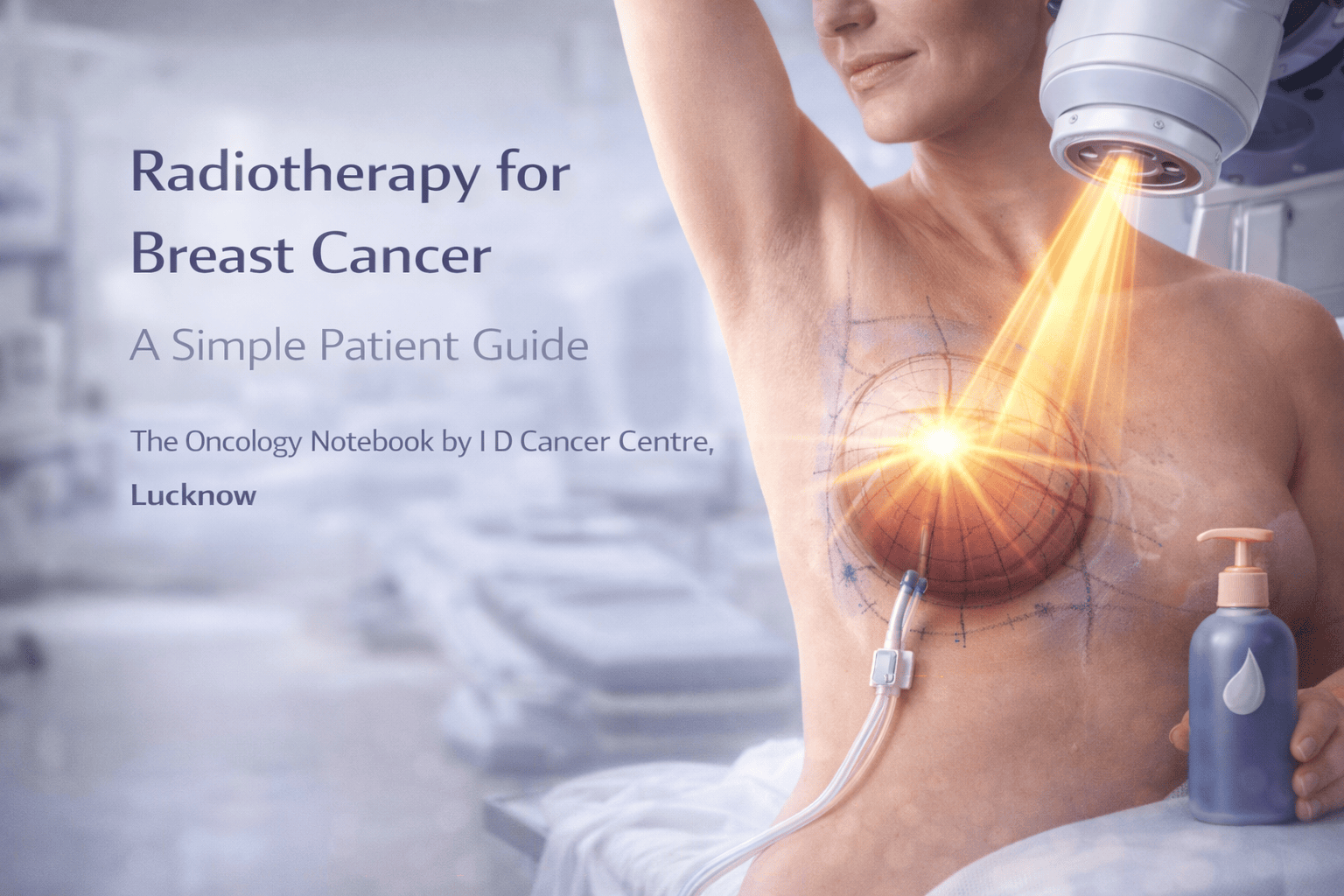
Radiotherapy (radiation therapy) is one of the most effective treatments for breast cancer. It uses carefully planned high-energy beams to destroy any remaining cancer cells and reduce the chance of the cancer coming back. Many patients feel worried when they hear “radiation,” but modern breast radiotherapy is precise, safe, and usually well tolerated.
This guide explains why radiotherapy is given, who needs it, what the process looks like day-to-day, expected side effects, and how to take care of yourself during treatment.
1) Why radiotherapy is used in breast cancer
Radiotherapy reduces the risk of recurrence by treating microscopic cancer cells that may remain after surgery.
Radiotherapy may be advised:
After breast-conserving surgery (lumpectomy): almost always recommended
After mastectomy: in selected cases based on tumor size, lymph nodes, margins, and other risk factors
For lymph node areas: when nodes are involved or risk is higher
For symptom control (metastatic disease): to relieve pain (e.g., bone metastasis) or control local symptoms
Key point: The aim is to improve long-term control and survival while protecting heart and lungs as much as possible.
2) Who typically needs radiotherapy?
Your oncology team decides based on stage, surgery type, pathology, and recurrence risk. Common situations:
A) After lumpectomy (breast-conserving surgery)
Radiotherapy to the whole breast is standard.
A “boost” dose to the tumor bed may be added in many patients.
B) After mastectomy (post-mastectomy radiotherapy, PMRT)
Radiotherapy may be recommended if:
Lymph nodes are involved (especially multiple nodes)
Tumor is large
Margins are close/positive
Skin or chest wall involvement is present
Certain high-risk features exist (your doctor will explain)
C) Regional nodal irradiation (RNI)
Radiation may include lymph node areas (axillary/supraclavicular/internal mammary) when indicated based on node status and risk profile.
3) When does radiotherapy start?
Usually 3–6 weeks after surgery, depending on wound healing.
If chemotherapy is planned, radiotherapy often starts after chemotherapy (in many protocols).
If you need hormonal therapy, it can be started either during or after radiotherapy based on your oncologist’s plan.
Your team will coordinate the sequence safely.
4) Types of breast radiotherapy (in simple words)
Whole breast radiotherapy (WBRT)
Treats the entire breast after lumpectomy.
Chest wall radiotherapy
Treats the chest wall area after mastectomy.
Boost radiotherapy
Extra dose to the tumor bed (where the tumor was removed).
Partial breast irradiation (selected cases)
Treats only the area around the tumor bed.
Not suitable for everyone; used in selected early-stage cases.
Modern techniques that improve safety
3DCRT/IMRT/VMAT: shapes radiation to match the target and protect organs.
IGRT: image guidance before treatment to ensure accurate positioning.
DIBH (Deep Inspiration Breath Hold): especially helpful for left-sided breast cancers to reduce heart dose.
5) Step-by-step: what happens during treatment?
Step 1: First visit (consultation)
Your radiation oncologist reviews:
Surgery details and pathology report
Need for breast/chest wall and lymph node radiotherapy
Dose and number of sessions
Expected benefits and side effects
Bring:
Surgical notes, biopsy reports, final histopathology report
Any chemo details
Scan reports (if done)
Step 2: Simulation/Planning CT (the “mapping” scan)
This is not a treatment day—it is for planning.
What happens:
You lie on a special CT table.
Your position is carefully set (often with arms above head).
Small skin marks/tattoos may be placed for daily alignment.
A CT scan is done in the treatment position.
If left-sided breast:
You may be trained for breath hold (DIBH).
Step 3: Treatment planning
A specialized team (radiation oncologist + physicist + therapists) designs a plan to:
Cover target areas (breast/chest wall ± nodes)
Minimize dose to heart, lungs, opposite breast, and skin folds
This planning can take a few days.
Step 4: Daily radiotherapy sessions
Usually Monday to Friday
Each session typically takes 10–20 minutes in the department
The beam-on time is only a few minutes
It is painless—like getting an X-ray (but stronger and precisely targeted)
You can go home afterward.
6) How many sessions will I need?
This depends on your plan and risk profile. Many modern schedules use:
Shorter course (hypofractionation): often about 3–4 weeks
Some cases may need longer schedules depending on nodal treatment, boost, reconstruction considerations, or specific protocols.
Your doctor will tell you the exact number.
7) Will radiotherapy make me radioactive?
No. External beam radiotherapy does not make you radioactive. You can safely be around family members, children, and pregnant women.
8) Common side effects (what’s normal)
Most side effects are temporary and improve within weeks after radiotherapy.
A) Skin changes (most common)
Redness (like sunburn)
Dryness, itching
Darkening of skin
Peeling (in skin folds or under breast)
B) Fatigue
Many patients feel tired, especially after 2–3 weeks.
Usually improves after treatment ends.
C) Breast/chest wall changes
Swelling or heaviness
Mild tenderness
Temporary firmness
D) Throat irritation (if nodes treated)
If radiation includes lower neck/supraclavicular area, you may feel:
Mild sore throat
- Swallowing discomfort(not in all patients)
9) Less common but important side effects (rare with modern planning)
Your doctor will discuss these based on your specific plan.
Arm swelling (lymphedema): risk may increase if nodes are treated and after axillary surgery.
Shoulder stiffness: from positioning or radiation near shoulder structures.
Lung inflammation (radiation pneumonitis): uncommon; may present as dry cough or breathlessness weeks to months later.
Heart effects: rare with modern techniques; especially minimized with DIBH for left breast.
Rib tenderness/fracture: very rare.
Skin telangiectasia or long-term pigmentation: possible but usually mild.
Second cancer risk: extremely low, and benefits outweigh risks.
10) How to take care of yourself during breast radiotherapy
Skin care (very important)
Wash gently with mild soap; pat dry (don’t scrub)
Moisturize with doctor-approved cream (avoid applying right before the session; keep a gap of a few hours)
Wear soft cotton clothes and a well-fitting supportive bra (no tight straps)
Avoid talcum powder, perfumes, deodorants on the treated area unless allowed
Avoid hot water, heating pads, and harsh rubbing
Protect from sunlight (cover area; use sunscreen only if advised)
Manage fatigue
Short walks daily if possible
Hydration and adequate sleep
Light balanced meals with protein
Nutrition tips
High-protein diet helps healing (dal, दूध/दही, paneer, eggs, fish/chicken if you eat non-veg, sprouts)
Plenty of fluids
If appetite reduces, eat small frequent meals
Exercise and arm care (especially if nodes treated)
Gentle shoulder stretches as advised
Avoid heavy lifting initially after surgery; follow physiotherapy guidance
Watch for arm swelling; report early
11) When should I call the clinic urgently?
Call your oncology team if you have:
Skin blistering, wet peeling, or severe pain
Fever or signs of infection in skin folds
Increasing breathlessness or persistent cough
Sudden swelling of arm/hand
Severe fatigue, dizziness, or inability to eat/drink
12) After radiotherapy: what to expect
Skin may continue to darken for a short time, then gradually improves.
Fatigue often improves over 2–4 weeks.
Follow-up visits are scheduled to monitor healing, side effects, and cancer control.
Continue systemic therapy (hormonal therapy/targeted therapy) as advised.
13) Frequently asked questions
Will radiotherapy affect my implants or reconstruction?
Radiotherapy can affect reconstructed tissue (especially certain implant-based reconstructions), sometimes increasing stiffness or contracture risk. Your team plans carefully and discusses expectations.
Can I work during radiotherapy?
Many patients continue work with adjustments, but fatigue may require flexible hours. Listen to your body.
Can I travel during treatment?
Daily sessions make long travel difficult. If travel is unavoidable, inform your team—treatment gaps are generally discouraged.
Is hair loss expected?
Radiotherapy causes hair loss only in the treated area. Head hair loss does not occur with breast radiotherapy.
Key takeaways
Breast radiotherapy is a proven treatment that reduces recurrence risk.
Planning is personalized and designed to protect heart and lungs.
Side effects are usually manageable and temporary.
Good skin care, nutrition, and gentle activity help you complete treatment comfortably.
Breast Radiotherapy at I D Cancer Centre, Lucknow
If you have a new diagnosis, a post-surgery radiotherapy plan, or want clarity on your report and options, we can guide you.
